DIY projects
How much paint do you need for a room?
Measure your walls, subtract openings, choose coats and coverage, then estimate litres and tin sizes before starting your DIY painting project.
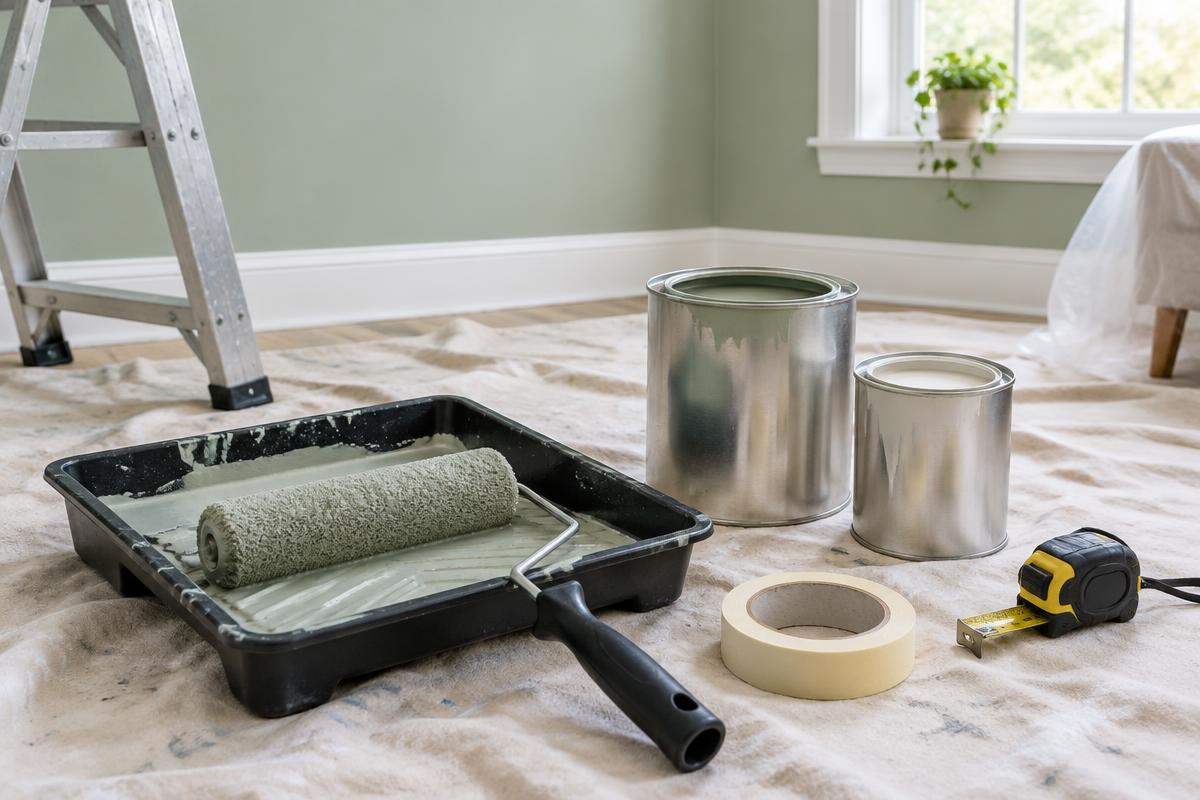
Measure the surfaces you will actually paint
For a rectangular wall, multiply width by height to get its area in m². Add the areas of the walls you intend to paint, then account for doors and windows using the paint calculator’s openings input. Keep ceilings or other surfaces separate if they need a different paint or coverage rate.
For example, suppose the walls total 40 m² and doors and windows account for 4 m². The net wall area is 36 m². Measuring each wall is more useful than guessing from floor area: rooms with the same floor area can have different wall heights and shapes.
Use the coverage on your chosen paint
The calculation is net area × coats ÷ coverage. Coverage is expressed in m² per litre. The calculator starts at two coats and 12 m²/L, but these are defaults, not a guarantee of product performance or the number of coats your room needs. Read your paint’s instructions and change the inputs to match.
Using the illustrative 36 m² net area, two coats and 12 m²/L gives 36 × 2 ÷ 12 = 6 litres. If the chosen product instead covers 10 m²/L, the same area and coats need 7.2 litres. That difference is why checking the tin matters more than accepting a generic coverage figure.
Convert litres into tins
You cannot usually buy the precise calculated volume. The paint calculator suggests combinations of 5 L and 2.5 L tins, rounding up to the smallest total in 2.5 L steps. For the 6-litre example, that means 7.5 litres: one 5 L tin and one 2.5 L tin. The extra is purchase-size surplus, not another coat automatically included in the estimate.
Check the sizes actually sold for your paint, finish and colour. The calculator’s tin combination is a planning aid, not a stock check. Different paints for walls, trim or ceilings should remain separate items on your list rather than being combined just because they are all measured in litres.
Make a project checklist before buying
Record the measured area, openings, chosen coverage and coat count alongside the result. Follow the product’s preparation and application instructions; the quantity calculation does not assess the condition of your walls. Review the estimate again if you change the paint or the scope of the job.
Add your paint result to the materials planner alongside the other building quantities you need. It gives you a consolidated list to copy or print, while keeping different tin sizes distinct. Estimates only. Check the manufacturer’s coverage rates.