EV charging
How to estimate EV charging time
Work out the energy your battery needs, understand charger and car limits, and turn a charging-time estimate into a practical plan.
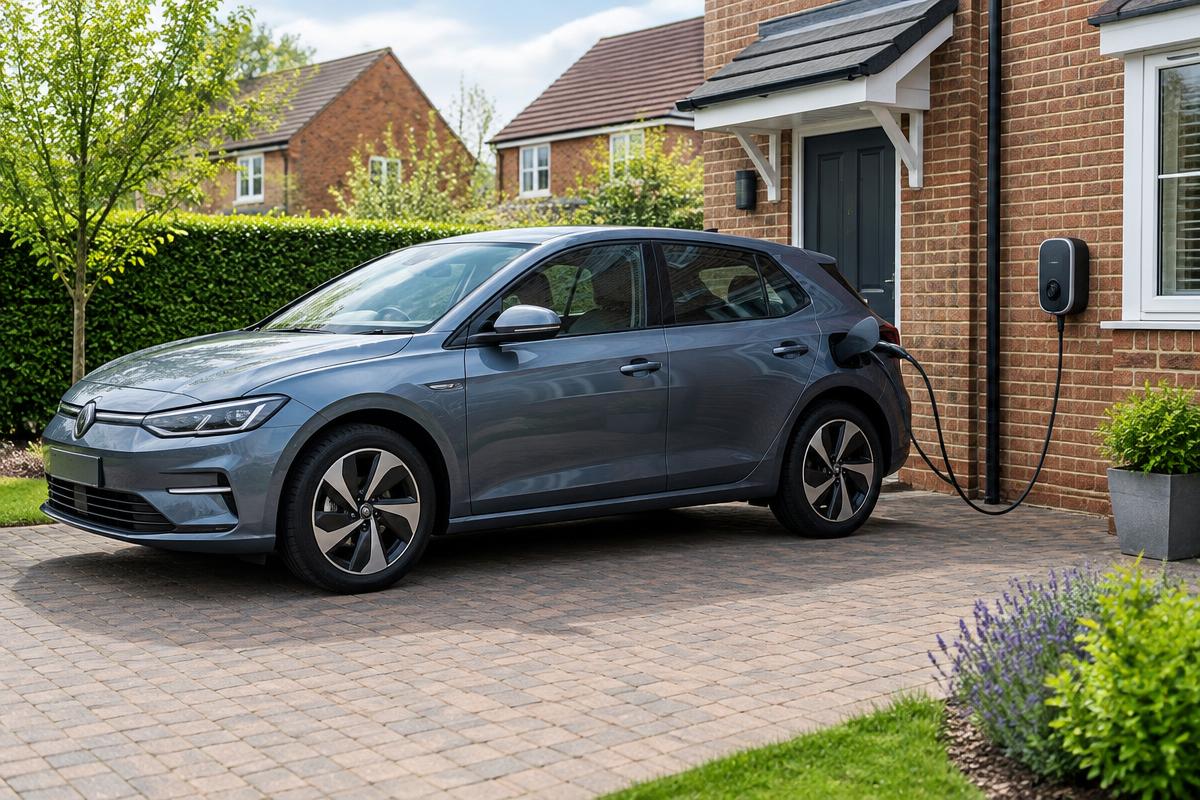
Start with the energy, not the charger rating
A charger’s kW rating tells you about power: how quickly energy can be delivered. Your battery’s kWh figure tells you about energy capacity. They are related, but they are not interchangeable. To estimate a top-up, start with battery capacity and the difference between your starting and target charge percentages.
For an illustrative 60 kWh battery going from 20% to 80%, the energy added is 60 × (80 − 20) ÷ 100 = 36 kWh. This is energy into the battery, not necessarily the amount drawn from the electricity supply. Use the battery-capacity figure appropriate to your vehicle rather than assuming every advertised capacity means the same thing.
The car matters as much as the charge point
A higher-rated charge point does not automatically mean your car charges at that rate. The estimate uses the lower of the charger’s power and the car’s acceptance limit. Check the relevant AC or DC limit for your vehicle: a car’s rapid DC headline figure is not its home AC charging limit.
The charging-time calculator also allows for efficiency. With an illustrative 7 kW charger, a car able to accept at least 7 kW, and 90% efficiency, effective power is 6.3 kW. Adding 36 kWh then takes about 5.71 hours, or 5 hours 43 minutes, in this simplified model. The corresponding grid energy is 36 ÷ 0.9 = 40 kWh.
Treat the answer as a planning estimate
This calculation assumes a steady effective charging rate. Real charging can vary with temperature, the vehicle and battery condition. Rapid DC charging in particular slows as the battery fills; the existing calculator guidance highlights tapering above about 80%. Dividing energy by a charger’s maximum rating alone can therefore give an optimistic answer.
Use the estimate to compare scenarios, not to promise an exact departure time. Check the car’s guidance and charge-point information, allow room for delays, and choose a target charge that fits your journey. For a cost estimate, use the electricity price you will actually pay with the grid-energy figure, rather than treating the battery energy as the whole bill.